
Highlights
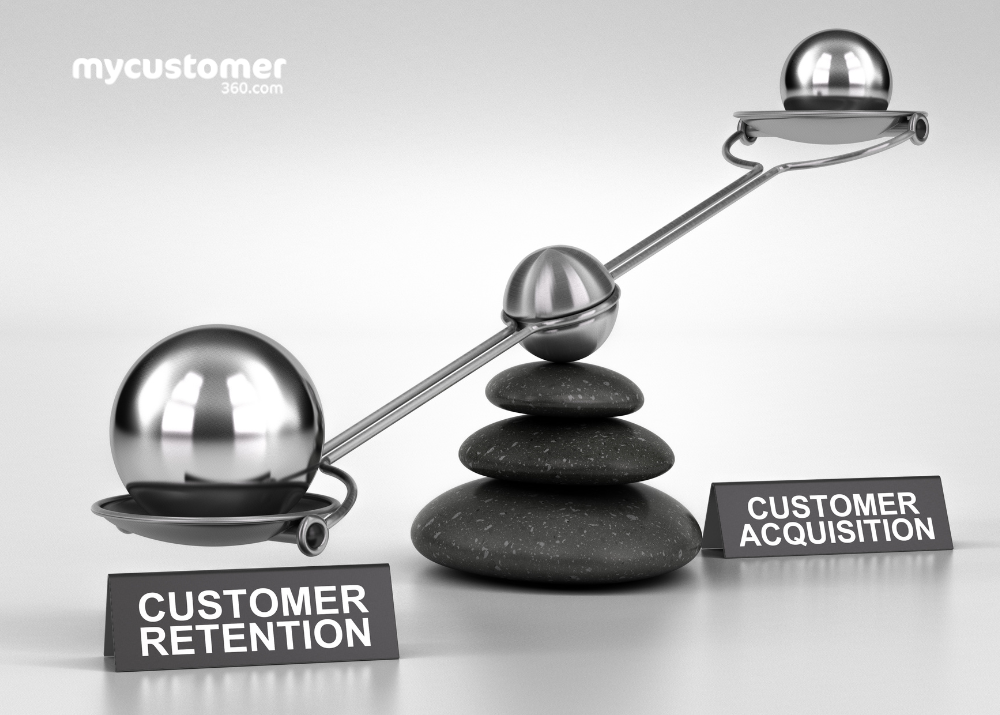
- Customer acquisition is important for gaining a foothold in a competitive marketplace, while retention builds a sustainable revenue pipeline.
- Average Customer Acquisition Cost (CAC) has increased in recent years, so acquiring new customers is expensive.
- Customer retention is more cost-efficient than acquiring new customers. It is easier to engage existing customers, as they are likely to make repeat purchases.
- Companies must invest in all the strategies for customer acquisition, retention, and customer expansion to promote revenue growth.
Introduction
A business can grow by adopting different strategies. It needs customer acquisition and has to make efforts to retain them. Acquisition is critical for the initial stages of the business as it helps expand market presence and ensure business continuity. Customer retention marketing nurtures the existing customer base and maximizes the value from them. But the question arises: which should be the go-to strategy for businesses? Should one be prioritized over the other, or should companies strike a balance between the two? In this guide, we’ll explore customer acquisition, retention, and expansion and the impact they have on your business.
The average customer acquisition cost has risen 60% in 2026 compared to 2020. On the contrary, customer retention costs have increased by only 12%. Bain and Company says that returning customers spend, on average, 67% more than new customers in their third year compared to the first six months. Forrester Research has also revealed that ROI on retention marketing is, on average, 5X higher than on acquisition marketing, measured over 24 months. All these statistics make it clear that retention marketing is equally important as acquisition, as it contributes to your revenue.
Customer acquisition is great for businesses, but several factors make it compelling for businesses to find other avenues of revenue generation via cross-selling and up-selling. Let’s discuss why customer acquisition remains a core strategy without dismissing the importance of existing customers for your business.
What is Customer Acquisition?
Customer acquisition involves strategies to attract new prospective buyers, engage them, and persuade them to become customers. A B2B sales lead generation company offers lead generation services that identify and capture your target audience and convert them into customers. Acquiring new customers typically requires greater investment than retaining existing ones, as it has to start from scratch with brand awareness and demand generation.
How does customer acquisition work?
Businesses adopt different customer acquisition strategies to attract new customers. They use search engine optimization (SEO) and content marketing to build brand awareness and educate prospective buyers. A reliable B2B sales lead generation agency in New York, San Francisco, Chicago, Los Angeles, Boston, or other cities in United States understands the importance of a multichannel strategy.
An acquisition strategy helps capture prospective buyers and convert them into customers. Highly effective marketing strategies include personalized email marketing, waterfall content syndication, and account-based marketing. Businesses also rely on webinar registration services and telemarketing to identify, connect, attract, and convert prospective buyers into customers. Acquisition keeps the business stable and thriving by continuously bringing in new revenue opportunities.
What is Customer Retention?
Customer retention strategies include nurturing existing customers by helping them get value from their purchase. It encourages them to make a buying decision again. The goal of the customer retention strategy is to leverage customer satisfaction and customer loyalty to increase customer lifetime value (CLV) and maximize revenue. Customer expansion services providers across United States, in cities such as New York, Los Angeles, San Francisco, Chicago, and Boston, use a range of strategies to build and retain customer loyalty. Customer success (CS) services ensure the customer experiences a smooth onboarding process and is offered proactive customer support. The CS teams leverage AI-enabled technology to forecast customer issues. This helps them solve issues proactively before they escalate into bigger problems.
What are the different customer retention strategies?
It starts with a smooth onboarding process that helps customers achieve their first win and realize their ‘first-value’ from the products and services. Proactive customer support and success services enable a business to better understand its customers and their issues. The team guides customers to achieve maximum value from their purchase. The customer expansion team implements loyalty and reward programs to encourage customers to expand their relationship with the business.
Difference between Customer Acquisition and Customer Retention
| Characteristics | Customer Acquisition | Customer Retention |
| Objectives | Focuses on expanding the total customer base | Focuses on nurturing and retaining the existing customer base and increasing the customer lifetime value (CLV) |
| Key KPIs | Customer Acquisition Costs (CAC), Conversion rate, cost-per-lead (CPL) | Customer lifetime value (CLV), churn rate, retention rate |
| Timeline | The value is realized as soon as the prospect is converted into a customer | It has a longer-term value. The value multiplies over the years with repeat purchases. |
| Cost | CAC is comparatively higher as it requires full investment across the entire marketing funnel. | Costs are comparatively lower as the business takes the relationship further, already built on trust and customer advocacy. |
| ROI | ROI is limited to the value of the first purchase made by the customers. | ROI is multiplied over the years with repeat purchases by the existing customers. |
Why is the acquisition of new customers crucial?
- Promotes growth: Acquisition is an absolute necessity in the early stages because a business needs a steady stream of new customers to grab market share and survive in the competitive marketplace. Ongoing acquisition strategies bring new customers and revenue opportunities that it can tap to scale and promote growth. New sales opportunities also let businesses enter new markets and expand their footprint.
- Create opportunities for customer retention: The premise of retention marketing is the existing customer base. Every new customer, when nurtured and offered an enhanced customer experience, will be ready for expansion initiatives. So new customers are crucial to maintaining current growth and supporting future growth.
- Builds a strong sales pipeline: An acquisition strategy brings new customers into the sales funnel and builds a sustainable pipeline with the influx of new leads, which eventually turn into customers. It helps predict revenue and build strategies to maximize revenue.
Why is customer retention a powerful revenue generation strategy?
According to HubSpot, customer retention is becoming a top business priority as rising CAC has put pressure on marketing budgets and profitability.
- Growth Potential: Several industry research studies cite that retention marketing is more profitable than acquiring new ones. According to HubSpot, existing customers spend 67% more than new customers and are likely to purchase additional products and services. In fact, retention is a powerful growth strategy that businesses must leverage. Higher customer retention provides significant value. It is comparatively easier to sell to existing customers than to new customers. Retention enables companies to grow customer lifetime value by offering excellent customer support, proactive customer management, and bringing back business from existing customers.
- Increase in revenue: Customer expansion is a highly strategic exercise that has a long-term positive effect on revenue operations. When businesses maintain healthy relationships with their customers and offer better customer experiences and high satisfaction, customers stay loyal to the brand. The current customer base is already familiar with your brand, has had a good experience with your products and services, and trust is already etched in their minds. Let’s take an example of B2B SaaS companies. Their satisfied customers are already using their software solutions. Buying a premium version of their current solution or trying new tools that are part of their ecosystem is a natural progression. This expansion initiative is built on customer success strategies; dedicated teams are deployed to stay in continuous touch with the customers. They help them derive maximum value from their purchase, anticipate their problems, and offer proactive solutions. It offers an enhanced customer experience on which the business can build both its customer acquisition and expansion initiatives. Industry research and reports also support the fact that cross-selling and upselling to existing customers offer lucrative sales opportunities.
- Cost efficiency: Customer retention is more cost-efficient than acquisition because nurturing the existing customer base is a natural progression of the relationship, and it leads to customer expansion. The business need not spend a considerable amount on brand awareness and marketing; it needs to take the relationship forward with a dedicated customer success and customer expansion team. Research has shown us how acquisition is comparatively more expensive than retention. It is up to 5 times more expensive because a business has to invest in a marketing strategy right from brand awareness and demand generation, then lead generation, and then customer acquisition follows. On the contrary, when engaging the existing customer base, the business has already invested in brand awareness, and customers are already familiar with the brand. Higher customer satisfaction makes it easier to sell to existing customers. The business does not have to invest a large marketing or promotional expenditure to acquaint them with their offerings. They need to build on the trust built through customer success services and expand their relationship through a customer expansion strategy.
- Advocacy and word-of-mouth: Existing customers who have received an exceptional customer experience and are satisfied with your products and services would be happy to refer your brand to others. This customer advocacy builds a positive reputation for the business, as it reflects a high-quality, customer-centric approach. It also attracts new customers, and the loop of customer acquisition, retention, and expansion continues.
Conclusion
We have discussed how customer acquisition, expansion, and retention are important for a company’s growth. It’s not about choosing one over the other, but giving importance to retention along with acquisition. New customers are vital to a business’s continuity and growth, and to sustain this growth, it’s necessary to work on existing customers. Both strategies have their own importance in a business journey, and neither can be overlooked. A B2B sales lead generation agency can help you with customer acquisition and customer retention strategies.
At MyCustomer360, we help your business deliver high customer satisfaction with a customer success strategy and increase customer lifetime value (CLV) with customer expansion services.
If you are looking for a proven framework for customer acquisition and expansion in New York, San Francisco, Chicago, Los Angeles, Boston, or other cities in United States, MyCustomer360 can help. We adopt a hybrid approach, combining human expertise in customer management with data-driven customer acquisition, expansion, and retention strategies. Book a free discovery call to learn more about how we can help you with customer acquisition and growth.
FAQs
What is customer acquisition?
Customer acquisition includes the strategies used to find and attract new prospects to the business. It encourages them to make their first buying decision, and eventually turn them into your customers.
What is customer retention?
Customer retention strategies refer to marketing activities that deliver an enhanced customer experience, high customer satisfaction with proactive customer management, and help buyers achieve maximum value from their purchase.
When does customer acquisition matter?
Acquisition is mainly prioritized in a company’s early stages, when the customer base is yet to expand, and the company still has to gain a foothold in the industry. It’s also worth prioritizing when businesses consider market expansion or want to launch new products for which they have yet to find a customer base.
Why is customer retention worth considering?
Customer retention has a positive effect on the long-term growth and revenue of the business. It’s a continuous process that helps the business retain customers who were initially acquired through a high investment in marketing and sales. With retention, they can achieve higher value from them with an increased wallet share.
What is the key difference between customer acquisition and retention strategy?
A business’s acquisition strategy attracts new buyers and converts them into customers. Customer retention focuses on existing customers. CS teams keep them engaged and satisfied with their current purchases, and encourage them to make additional purchases, increasing customer lifetime value.
Which is the best strategy for promoting business growth? Is it customer acquisition, retention, or expansion?
Businesses should continuously invest in all the strategies as they are essential for business growth. Acquisition opens new business opportunities, and it’s especially important in the early stages of growth; retention keeps the momentum going with repeat revenue and builds long-term sustainable success with customer success and expansion strategies.